My First Season Running a Duck Shoot

By Phil Taylor

Ever since I began game shooting, I’ve dreamt of having my own shoot. Last year, that became reality on a farm where I’d been doing pest control. What started with feeding one pond to flight a few ducks grew into a small, friendly and sustainable shoot I’m proud of. The aim wasn’t to go commercial but to create relaxed days with friends, a modest bag (around 30 birds) and plenty of laughs. 

How It All Began

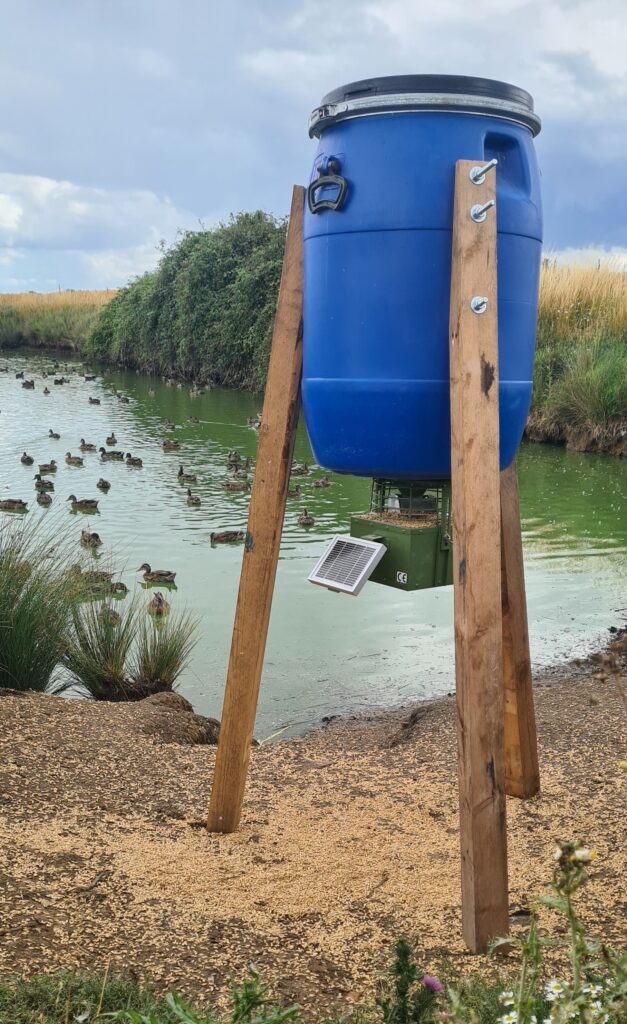
At the end of the previous season, I suggested putting a few ducks down. By late winter, the idea had grown into three duck ponds, plus a spinney for pheasants after I’d noticed a few lingering around my deer feeders.  

Planning & Preparation

I sourced ducks from Charles Grisdale in Wales and, with the guidance of experienced keepers, prepared the ground. Ponds were fenced – two with electric, one requiring 200m of chicken wire plus solar fencing. Overgrown trees were cleared to open the canopy. 

Feeding & Watering

Ducks started on grower pellets, then a pellet/barley mix, before moving to barley alone. Pheasants had King Hat and barrel feeders, plus hand feeding of maize and wheat on small rides. 

With no water system, I lugged up to 300 litres at a time in bottles and containers. Worming meant emptying and refilling drinkers, while apple cider vinegar was added to help bird health. 

Tech & Pest Control

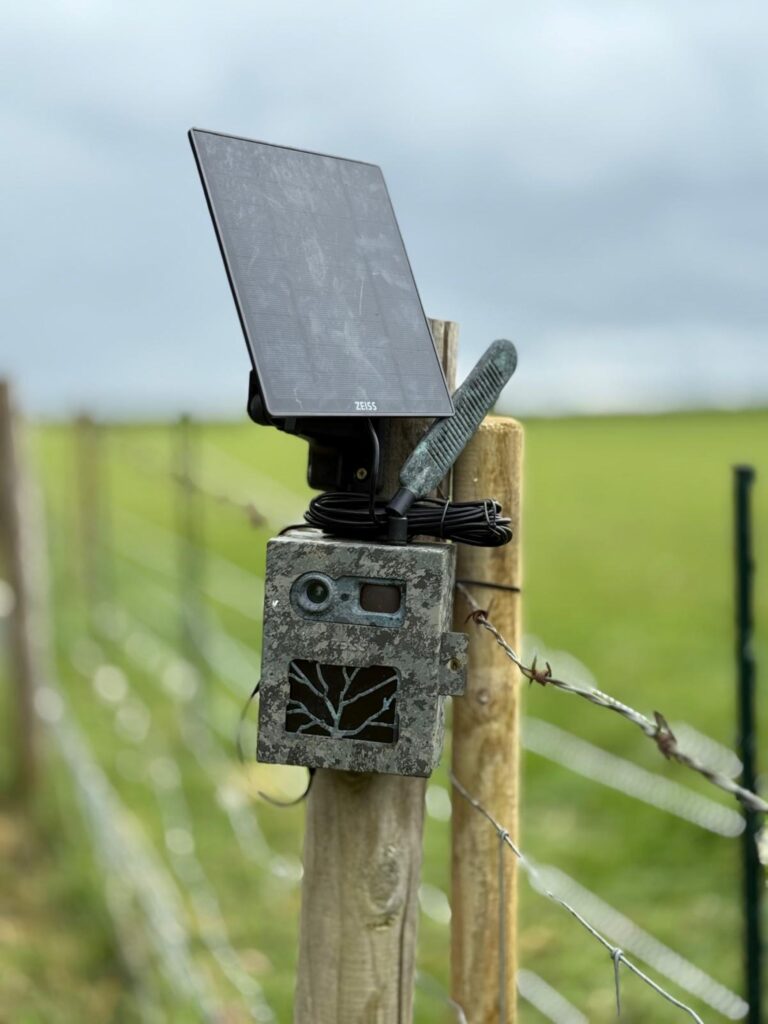
ZEISS Secacam trail cameras were essential. Instead of long hours waiting for foxes, I could check the app in minutes to see where and when they were moving – saving time and improving results. 
Delivery Day

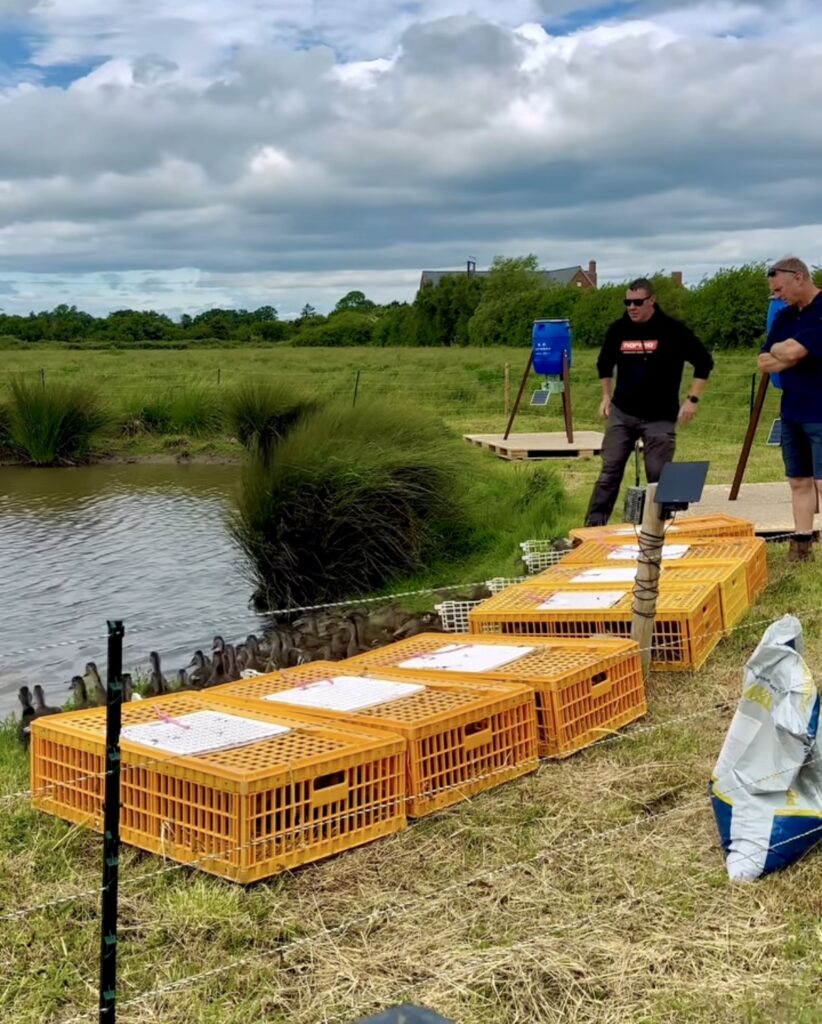
The ducks settled in quickly. The pheasants, however, were chaos – scattering far and wide within hours. We tried to dog them back in but mostly had to hope they’d return once the weather cooled.

The First Shoot Day

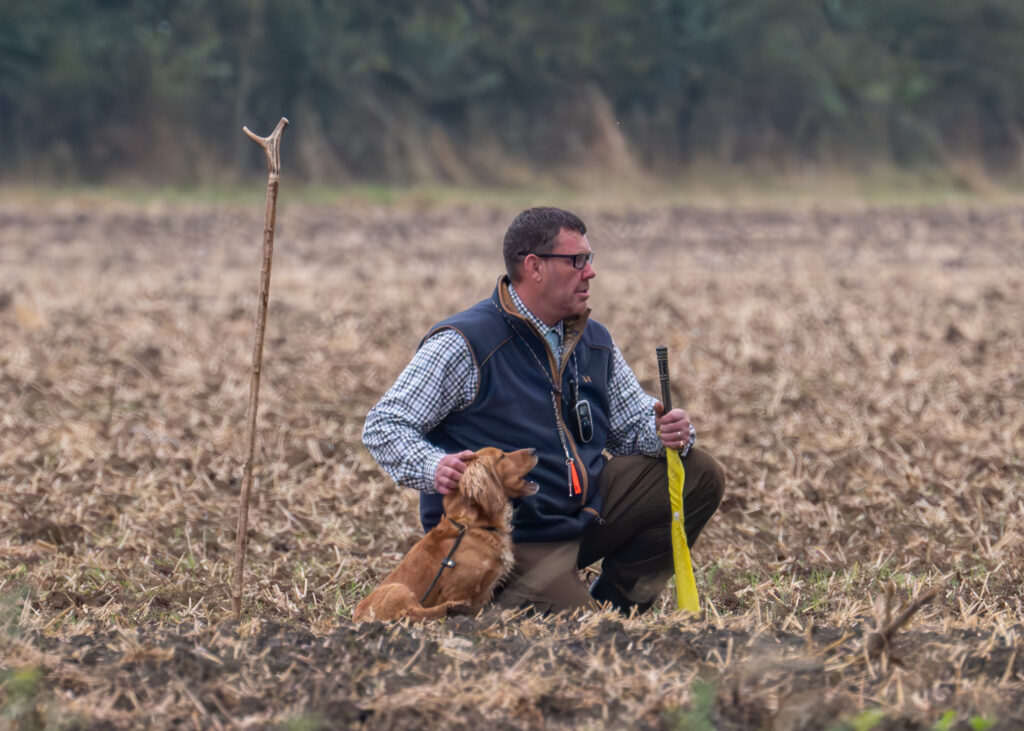
September 2nd arrived with coffee and pastries at 9am, three relaxed duck drives and elevenses in between. I was nervous, but by the end of the day we had 31 birds – bang on target.
Looking Ahead: 2025/26 Season

I’ve learned loads, made mistakes and already improved for the coming season:

  • Two new ponds added
  • A partridge drive in the works (thanks to Joe for rearing them)
  • Ducks delivered earlier and already flying
  • Pheasants arriving mid-July
  • A proper pheasant pen being built
  • A 40ft shipping container being converted into a shoot room for coffee, elevenses and drinks

The only frustration has been dry weather – over 100,000 litres of water pumped into one pond. But that’s game keeping for you and we’ll carry on. 

A massive thank you to beaters, pickers-up, helpers, landowners and of course the dogs – the real stars. I can’t wait to get going again. 

Stay safe, shoot straight and have a great season ahead! 


Tips & Tricks Learned

  1. Bird sourcing: Get your duck growers early to maximise their age and performance for the start of the season.
  2. Fencing: Chicken wire plus solar fencing keeps ducks in and predators out.
  3. Habitat: Clear pond edges and open canopies for healthier flight lines.
  4. Feeding: Use auto feeders to reduce distrubance; transition gradually from pellets to grain.
  5. Watering: Hand-fill drinkers, worm through water, add apple cider vinegar as a tonic.
  6. Trail cameras: ZEISS Secacams save time and reveal fox movement patterns.
  7. Teamwork: Lean on experienced keepers and helpers – success is a shared effort.
 

“Can you spot it?” – Why the invisible becomes visible thanks to ZEISS AI animal recognition

A discussion with ZEISS experts about algorithms, data protection and the future of hunting.

Artificial intelligence is no longer a dream of the future, but is now part of our everyday lives. Whether it’s ChatGPT, voice assistance systems or now even in the middle of the forest. Trail cameras, such as the recently introduced ZEISS Secacam 5 & 7, have become indispensable hunting equipment. They provide insights into the habitats and populations of wild animals, enabling efficient monitoring of hunting grounds. But one function stands out in particular: The ZEISS AI animal recognition.
In an interview with Benedikt Hartmann (Head of Innovation and Project Owner), Dr. Dennis Thom (Machine Learning Research Scientist) and Najma Begum (Lead Developer Machine Learning Solutions), we discover what is behind this innovation and why this technology is laying a crucial foundation for the future of hunting.

ZEISS: At first glance, AI may seem out of place in the middle of the forest, but with the new AI-based ZEISS animal recognition, this is exactly what is happening. Benedikt, as the Project Owner, you understand the needs of our hunters in detail. Can you briefly explain to us what is behind the AI animal recognition of the ZEISS trail cameras?

Benedikt: Our AI animal recognition is an innovative solution that makes it possible to automatically detect and identify animals in images from trail cameras. We use machine learning and image processing algorithms and can therefore analyze within a few seconds whether wild animals can be seen in an image and what species they are.

ZEISS: When can AI animal recognition be particularly helpful?

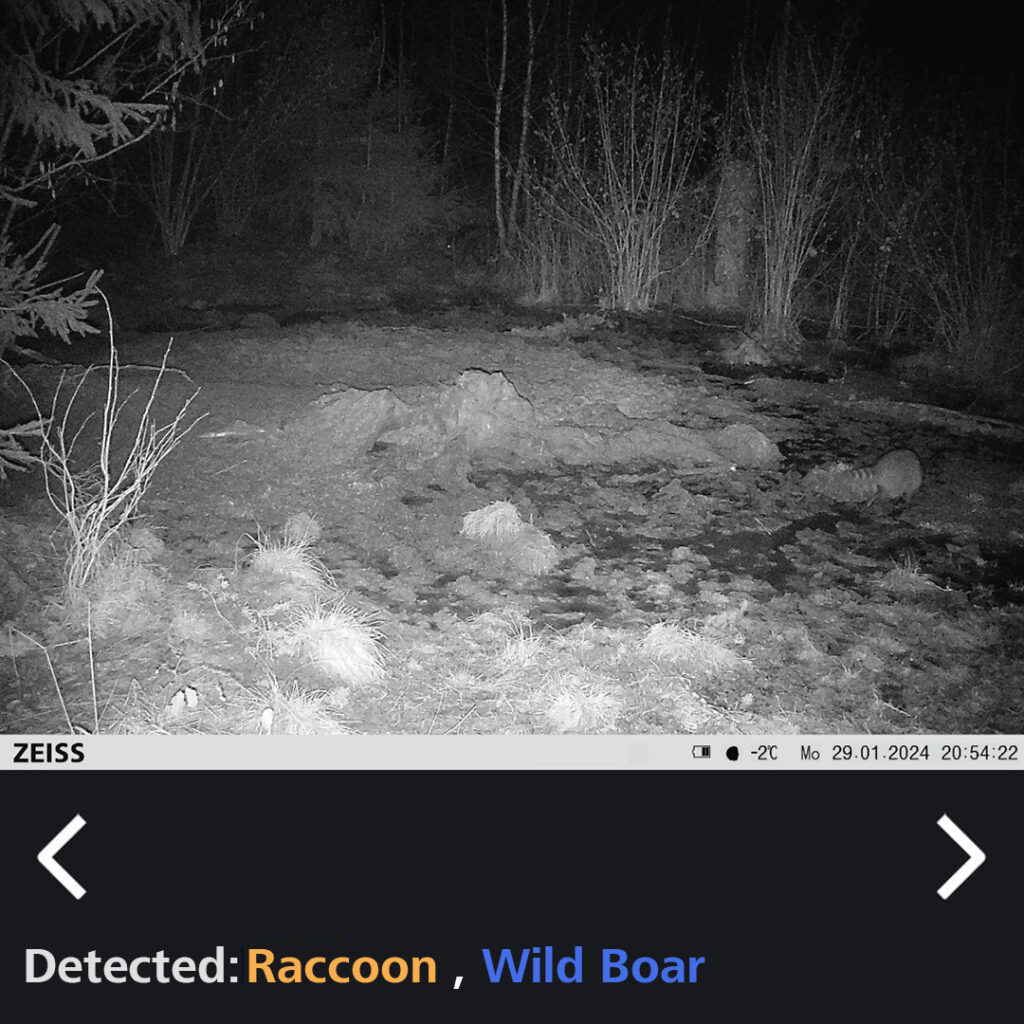
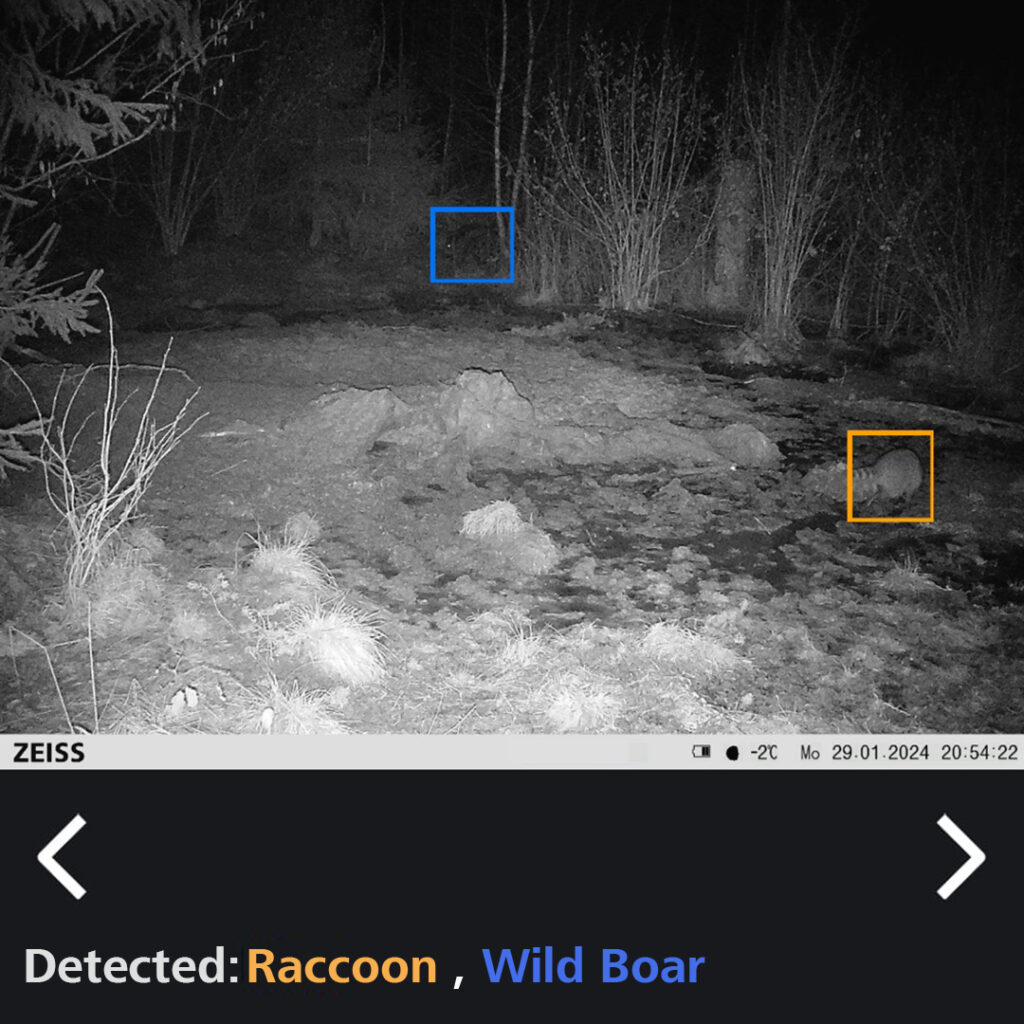
Benedikt: Animal recognition is particularly useful for images where it is not immediately clear whether there is an animal in the picture at all, for example if it is hidden behind a bush or in the darker areas of a night shot. As the AI also works reliably even with images showing different animal species, hunters can filter their image gallery according to relevant information and thus monitor their hunting grounds.


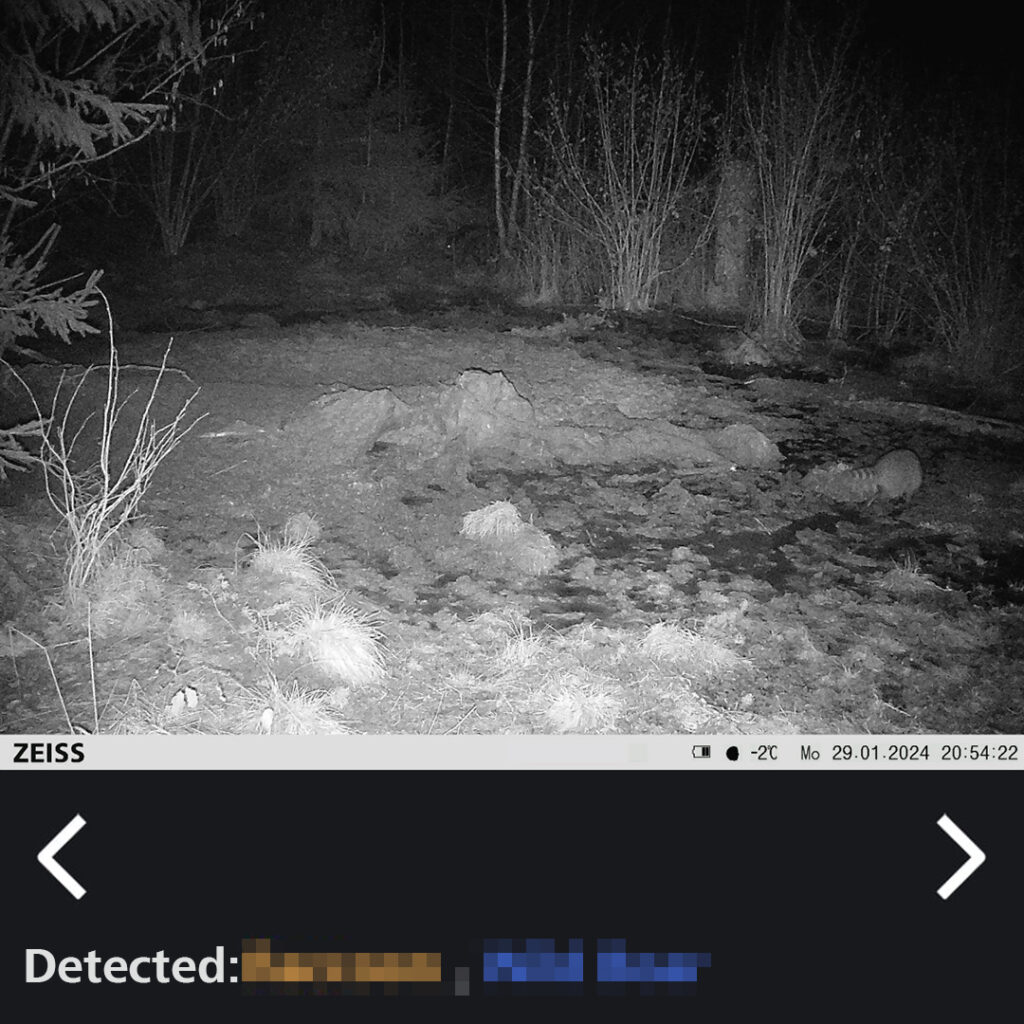
Would you have spotted the wild boar in front of the camera?


ZEISS: Dennis, as a Machine Learning Research Scientist, you are responsible for developing and optimizing the AI algorithms. How does AI animal recognition work?

Dennis: Our animal recognition is based on deep learning. We have collected training data from various places relevant to hunting, such as high seats or game crossings, and had them analyzed and annotated by hunters. Our AI algorithms are trained to detect different animal species in images and recognize them based on their characteristics, such as size, shape or coat colors. Through continuous training with a large number of images, we can improve the accuracy and reliability of recognition.

ZEISS: That sounds like an incredible amount of data to process. Najma, how can that work?

Najma: We have designed and built our own cloud infrastructure, which is precisely tailored to the needs and challenges of animal recognition. The use of cloud computing enables us to process large volumes of images quickly and return the results to users within seconds. Data protection is a key aspect here. The solution is highly secure, and all data is stored in datacenters in the EU and is therefore subject to strict EU data protection regulations.

ZEISS: What AI is already able to do today sounds really fascinating. What else can come? How do you see the future of hunting?

Benedikt: The AI-based animal recognition of the ZEISS Secacam is a very good example of the useful application of artificial intelligence. It enables hunters to improve their wildlife management by obtaining more precise data about the animal populations in their hunting grounds. We are working on continuously improving our solution, for example by adding new animal species and extracting further relevant information from the image. The aim is to develop a data-based dashboard that helps hunters to plan their hunt better. This will make their hunt even more successful.

Dennis: ZEISS invests tremendously in research and development. This enables us to create the necessary conditions to continue working on such innovations. And allows us to make our AI models even more precise and provide hunters with even more comprehensive information.