Recap Thin[gk]athon – Taking Virtual Shopfloor to the Next Level

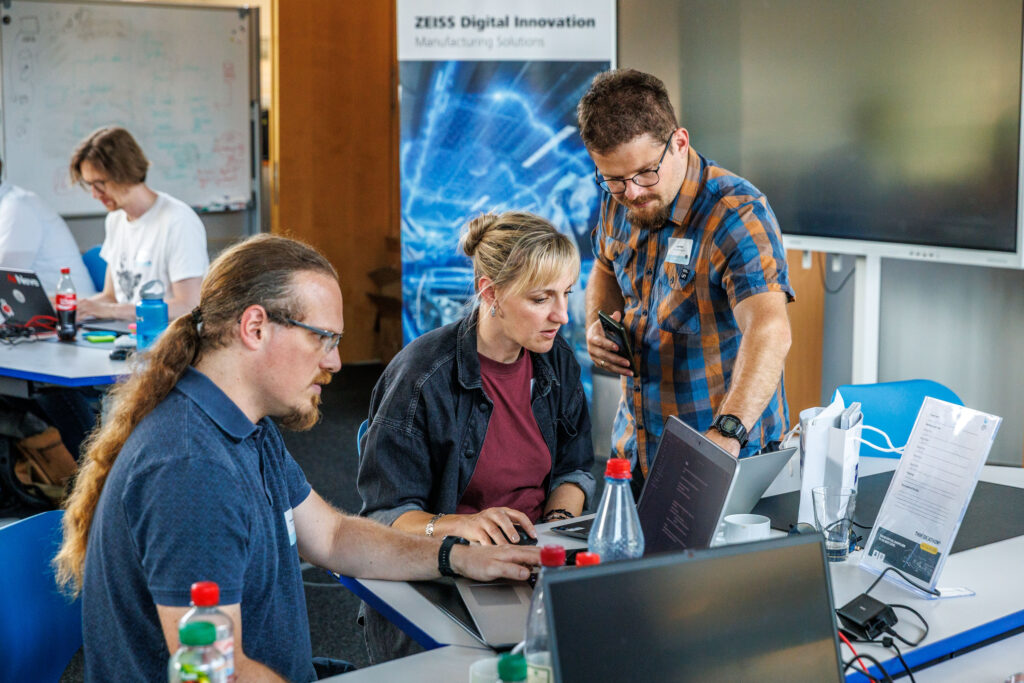
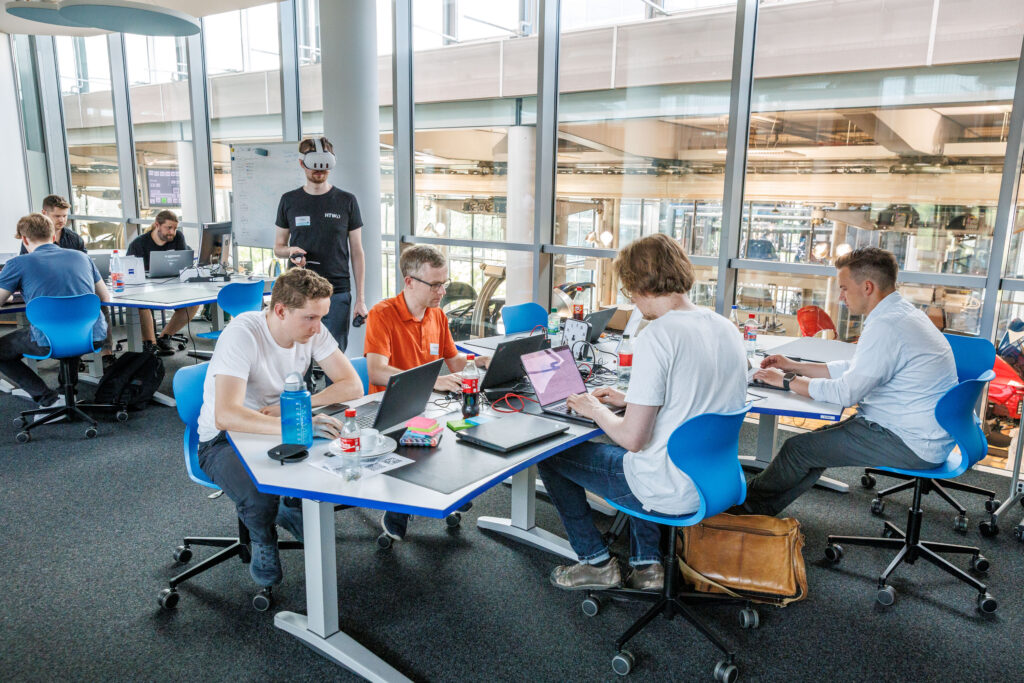
How do you bring a physical production hall into the digital world? This question was at the heart of the Thin[gk]athon, with ZEISS Digital Innovation and Volkswagen Sachsen as the challenge owners. The co-innovation format of the Smart Systems Hub provides the methodological framework to collaboratively tackle highly relevant challenges. This time, the motto was “Taking Virtual Shopfloor to the Next Level,” inviting ambitious minds with diverse professional backgrounds to jointly explore the boundaries of digitalization. The result: interdisciplinary teams where fresh perspectives met diverse experiences to develop innovative solutions.
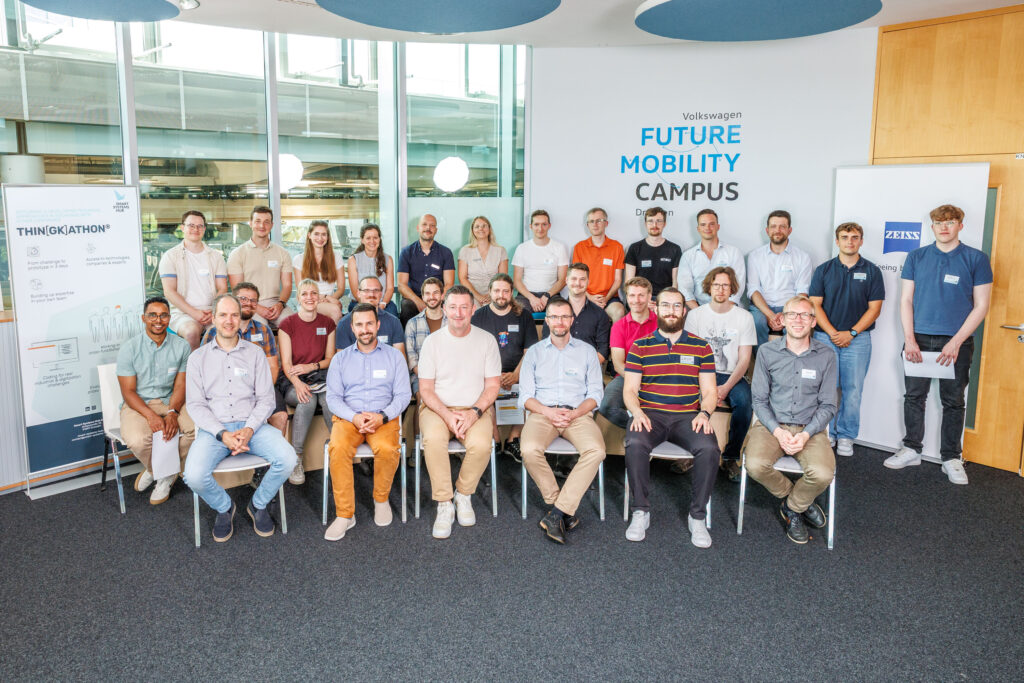
Participants and jury, front row from left to right: Prof. Marius Brade (University of Applied Sciences Dresden), Dr. Stefan Feldmann (Zeiss), Dr. Dirk Thieme (Volkswagen), Daniel Beltz (Sachsenmilch), Leonid Dendya (Volkswagen)

The Challenge: Making Digitalization Tangible

At the center of the challenge was the task of transferring real production data into a virtual 3D world – interactively, scalable, and practically. The teams had to link scanned production environments, comprised of point clouds and images, with digital product passes. Specifically, this meant autonomously recognizing QR codes in the 3D scans and linking them with information from the Asset Administration Shell (AAS). The goal was a walkable, interactive 3D scene that not only visualizes the environment but also provides data and optimizes processes. To make the results transferable, a generic approach was chosen.
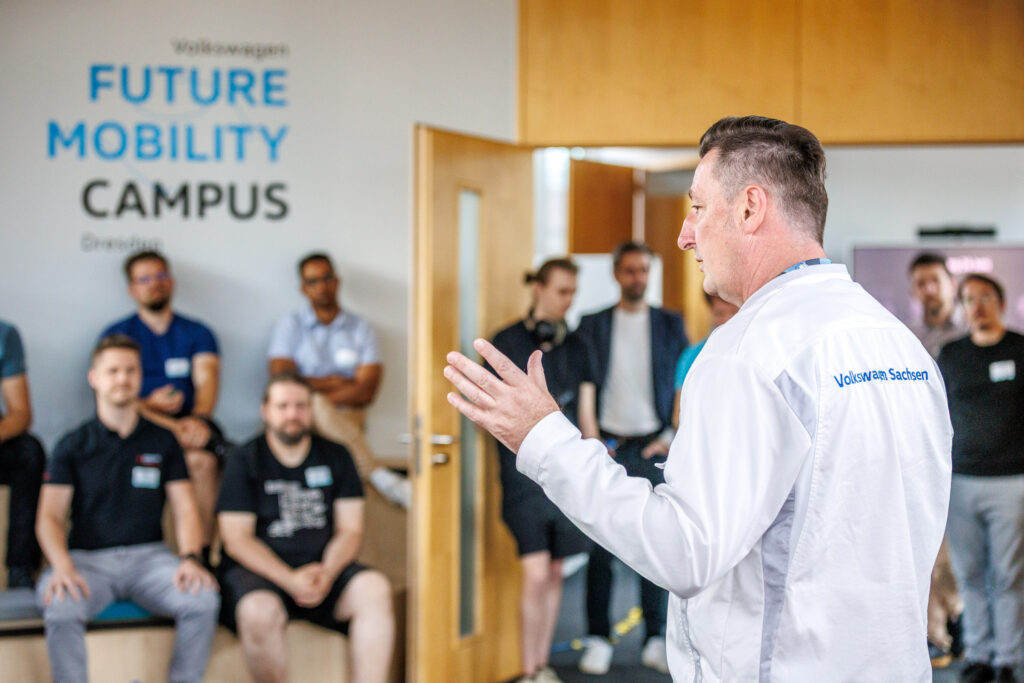
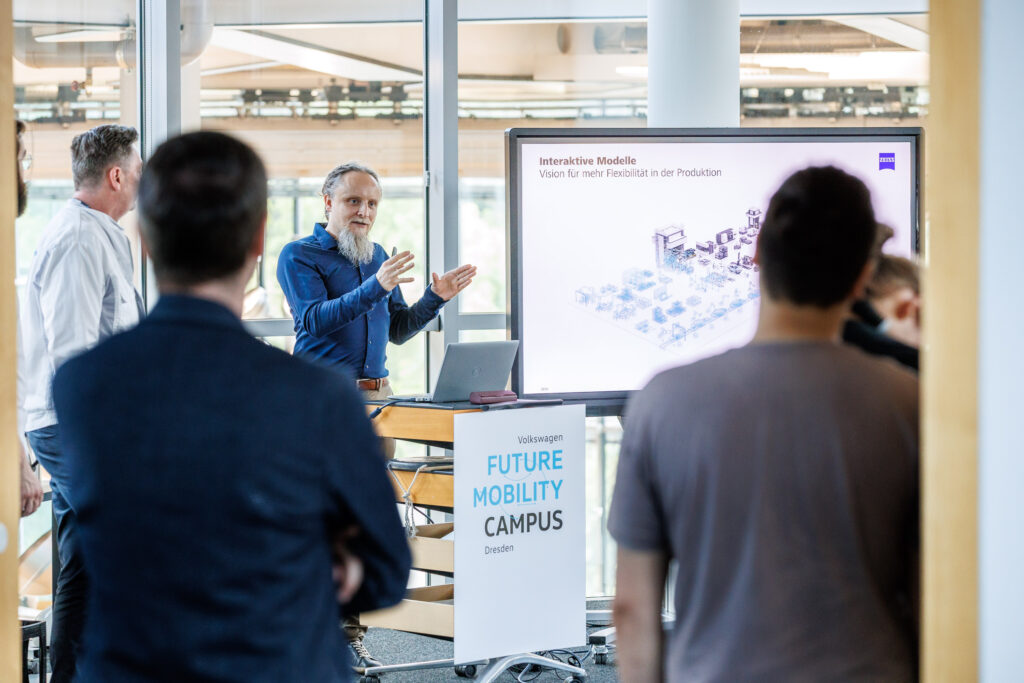
26.06.2025, Dresden, Thin[gk]athon, ZEISS Digital Innovation, Smart Systems Hub, Volkswagen Sachsen

Teamwork as an Innovation Driver

The teams, consisting of participants with diverse professional backgrounds, demonstrated how valuable this format is. By combining knowledge from IT, production, design, and science, new ideas emerged that replaced conventional thinking with fresh impulses. Our colleagues Pawel Adaszewski and Gergely Honti from ZEISS Digital Innovation also supported the teams with their expertise in software development and their shopfloor experience. In the end, all teams presented practical concepts within just three days and outlined possible next steps for building an interactive and scalable digital twin.

Technological Deep Dive: A Challenge in Three Dimensions

The true complexity of the challenge was revealed in the raw data. The datasets were in the form of so-called 3D Gaussian Splats – a modern method for rendering photorealistic scenes from photos. The result: a huge and often noisy point cloud that first had to be filtered from noise. Some teams tried to analyze the density of the point cloud with the K-Nearest-Neighbors algorithm (KNN) but quickly abandoned this approach due to the enormous amount of data. More successful was a box-based method that divided the space into a voxel grid – imagine this as a division into small cubes. By calculating the point density in each cube, machine clusters could be quickly and efficiently isolated.

The biggest hurdle remained the detection of QR codes. The crucial insight was that the 3D scans only depicted the surfaces of the objects. Instead of searching the entire 3D space, the teams could specifically search the rendered surface for areas with high black-and-white contrast. However, the practical implementation was rocky: attempts to visualize the found contrast hotspots with Python-based 3D renderers failed due to software conflicts and bugs. The breakthrough finally came through a pragmatic switch to the Unity engine. Using WebGL rendering, the virtual camera was moved to the calculated coordinates to find and read the QR codes.

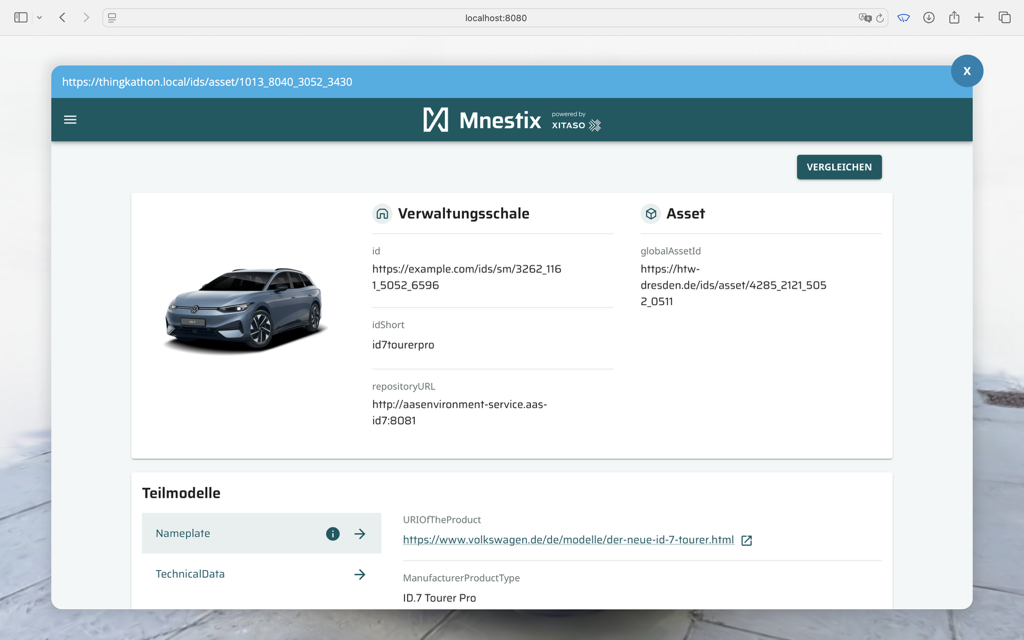
After preprocessing, a spatial relationship between the QR codes and the associated machines was established. This spatial relationship was used to retrieve data from the Asset Administration Shell (AAS) for the user and display it in an interactive user interface. A possible frontend allowed users to interactively navigate through the point cloud and explore the relevant information.

The Winning Team’s Solution

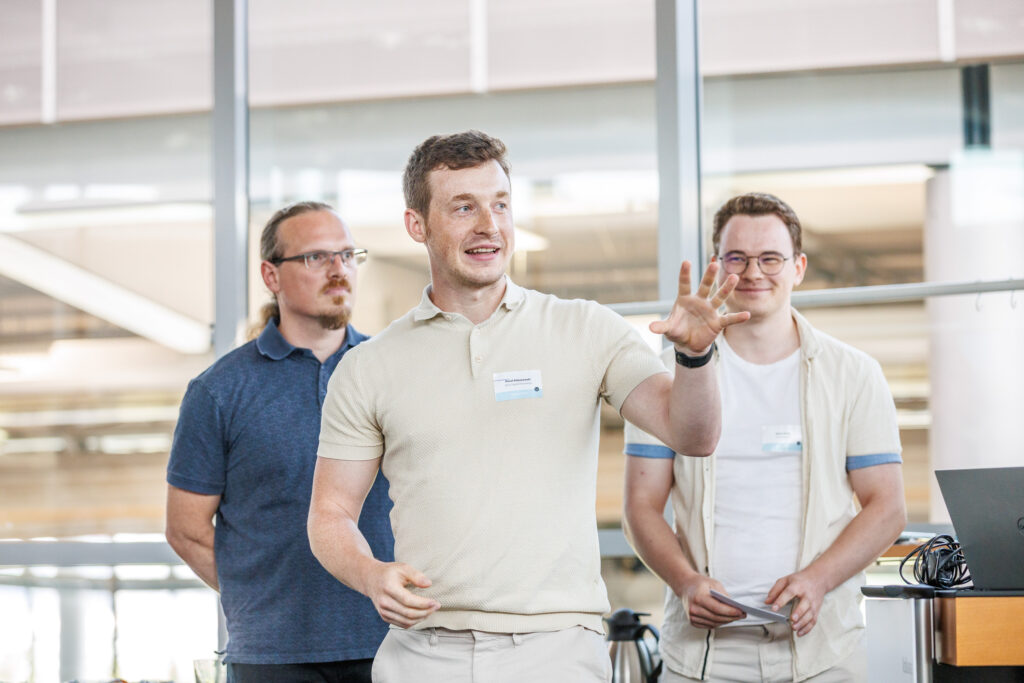
The winning team from the Information Management department at HTW Dresden – consisting of Stefan Vogt, Robert Pampuch, Johannes Metzler, Felix Fritzsche, and Paul Patolla – impressed with a functioning solution that also won the competition. For them, it was three intensive days full of technology, exchange, and practical development.
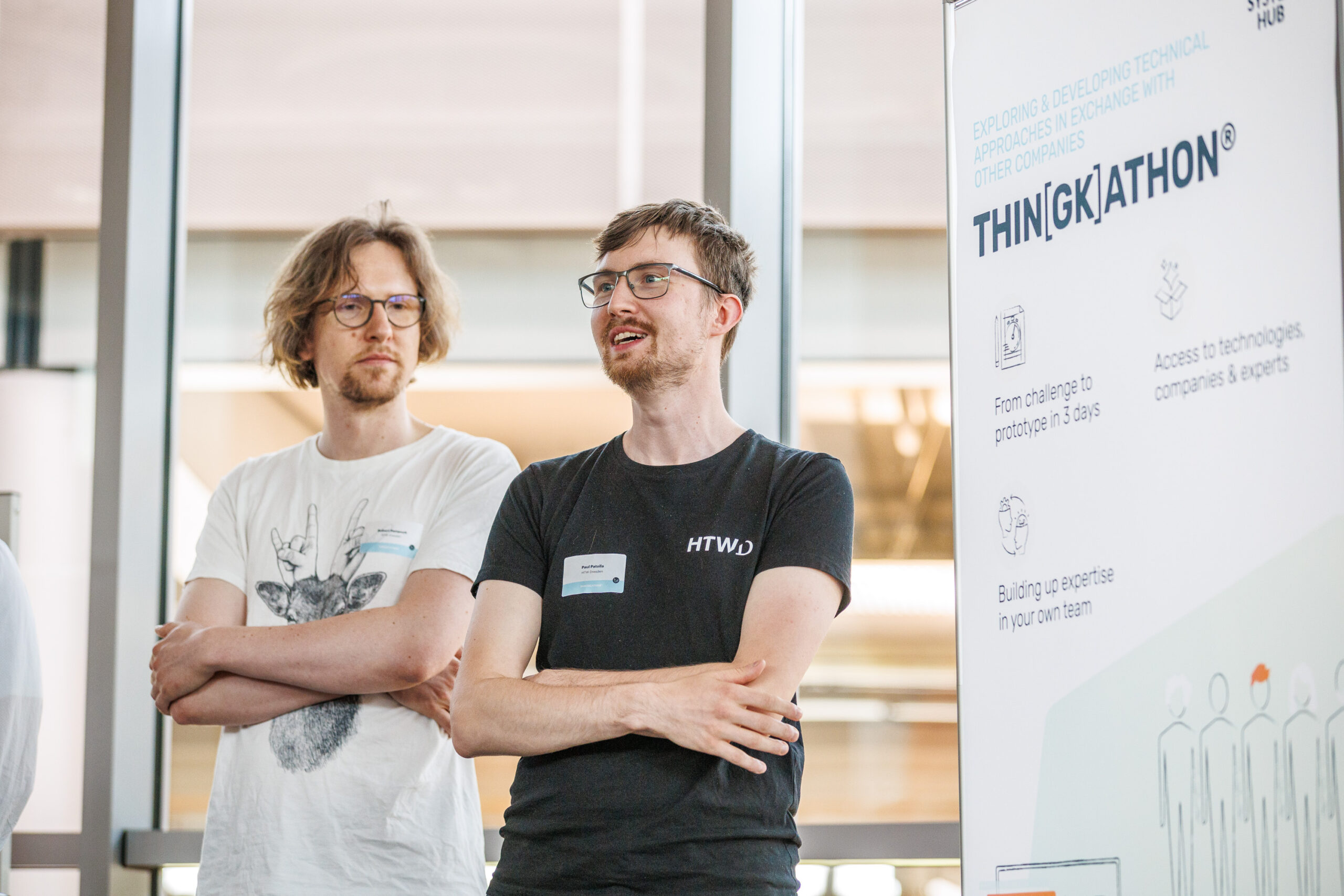
“This event brings together the challenges of the economy and the knowledge from research and shows how convincing solutions can be developed together in a short time,” says Paul Patolla from HTW Dresden.
Figure 1: Interface in the administration shell

The technical processing of their solution was based on several steps. First, video files were broken down into individual frames to identify QR codes along with position information in each frame. For this, they primarily used the Python library OpenCV, which enabled efficient image preparation and robust QR code recognition. In parallel, the team used the Gaussian Splatting method, based on the scientific publication by Kerbl et al., to generate a realistic point cloud from the image data. This allowed the precise localization of the QR codes in a three-dimensional context.

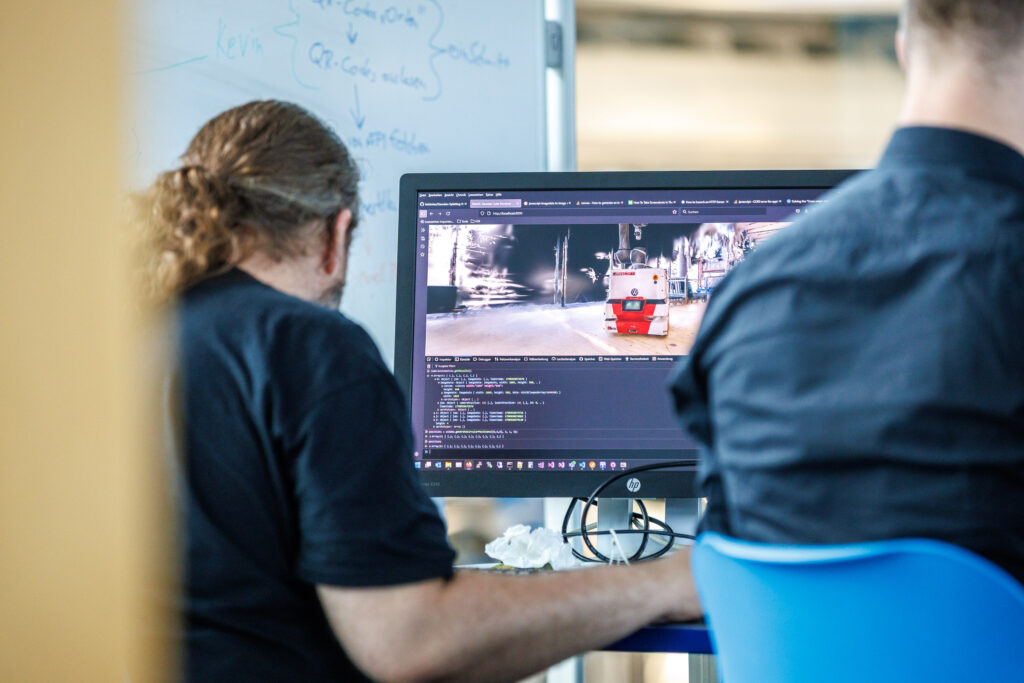
For visualization, Babylon.js was used, allowing the results to be experienced directly in the browser (and optionally in VR) as a WebXR application. Additionally, NVIDIA Omniverse was used to generate textures, significantly enhancing the visual quality of the representation. This way, a comprehensive solution was created that intelligently combined data analysis and immersive 3D visualization, demonstrating a clear connection to practice.
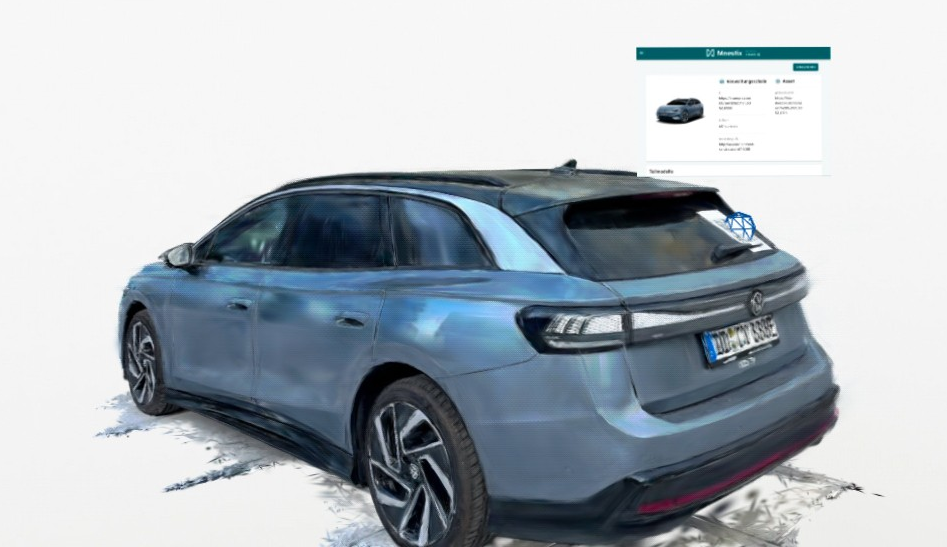
Figure 2: Screenshot of the winning team’s solution

Conclusion and Outlook

A panel of experts from industry and academia evaluated the concepts based on technical depth, feasibility, and teamwork. The teams demonstrated a strong commitment to social responsibility by donating their prize money of €2,000 to charitable organizations.
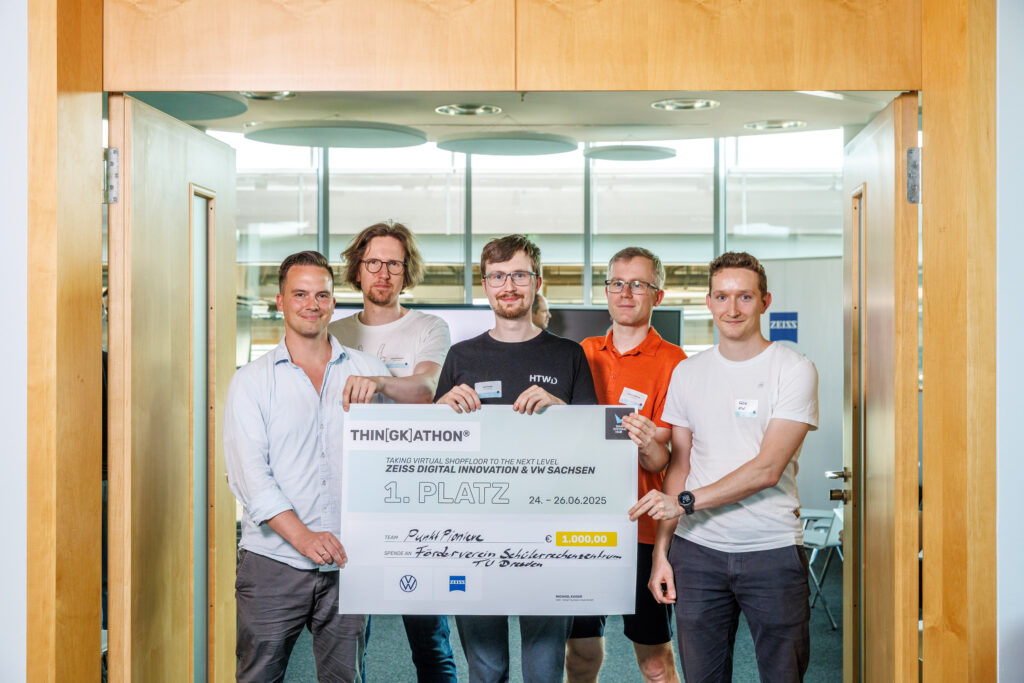
Winning team “Punkt Pioniere”

The Thin[gk]athon once again proved that the digitalization of production is not an end in itself but an effective tool. It enables more efficient processes and data-based decisions that create sustainable added value for the shopfloor. The key to success lies in structured data enablement and the targeted use of existing production data.

The developed concepts impressively show how complex challenges can be solved through the combination of technology, team spirit, and methodological support. We look forward to continuing formats of this kind and further promoting exchange together.
Patient care of the future – Digital Health Solutions with Azure Health Data Services

Since the beginning of the Covid pandemic the healthcare sector has been under enormous pressure. The demographic development, the change in the spectrum of diseases, legal regulations, cost pressure and a shortage of specialists combined with the increasing demands of patients, present healthcare organisations with a number of challenges. Here, digitalisation and the use of modern technologies such as artificial intelligence or machine learning offer numerous opportunities and potentials for increasing efficiency, reducing errors and thus improving patient treatment.

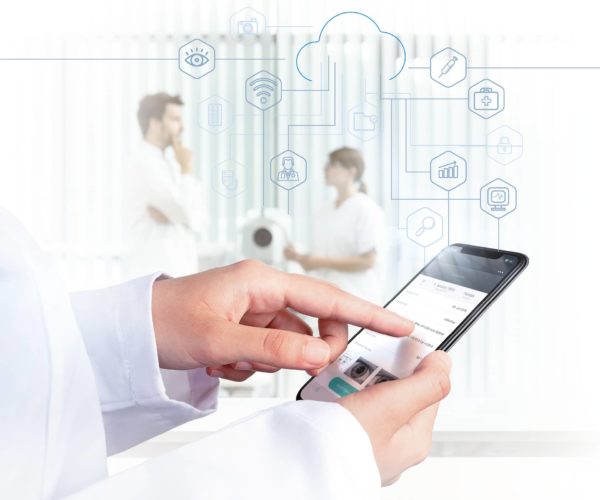
Doctor uses cloud-based medical application on smartphone, healthcare professionals talking in the background
Figure 1: Digital Health Solutions with Azure Health Data Services for optimal and future-proof patient care

Use of medical data as the basis for optimised patient care

The basis for the use of these technologies and for future-oriented predictive and preventive care is medical data. This can already be found everywhere today. However, most healthcare professionals and the medical devices in use still store this on-premise, resulting in millions of isolated medical data sets. In order to get a fully comprehensive overview of a patient’s medical history and, based on this, to create treatment plans in terms of patient-centred therapy and to be able to derive overarching insights from these data sets, organisations need to integrate and synchronise health data from different sources.

To support the development of healthcare ecosystems, the major global public cloud providers (Microsoft Azure, Amazon Web Service and Google Cloud Platform) are increasingly offering special SaaS and PaaS services for the healthcare sector that can provide companies with a basis for their own solutions. Through our experience at ZEISS Digital Innovation as an implementation partner of Carl Zeiss Meditec AG and of customers outside the ZEISS Group, we recognised early on that Microsoft offers a particularly powerful healthcare portfolio and is continuing to expand it strongly. This became clear again at this year’s Ignite.

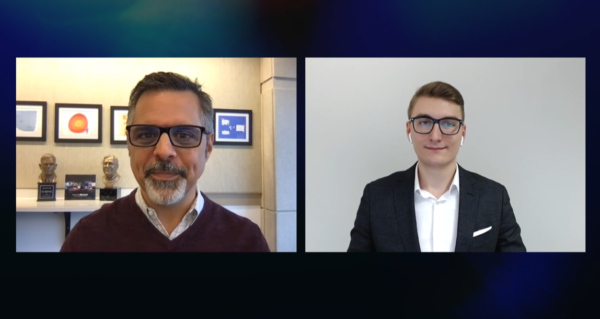
Screenshot of a video in which two people are talking virtually about a certain topic
ZEISS Digital Innovation (right) at Ignite 2021 talking about how to get long-term value from healthcare data with Microsoft Cloud for Healthcare. (Click here for the full video)

Medical data platforms based on Azure Health Data Services

One possibility for building such a medical data platform as the basis of an ecosystem is the use oAzure Health Data Services. With the help of these services, the storage, access and processing of medical data can be made interoperable and secure. Thousands of medical devices can be connected to each other and the data generated in this way can be used by numerous applications in a scalable and robust manner. As Azure Health Data Services are PaaS solutions, they can be used out of the box and are fully developed, managed and operated by Microsoft. They are highly available with little effort, designed for security and are in compliance with regulatory requirements. This significantly reduces the implementation effort and thus also the costs.

Carl Zeiss Meditec AG also relies on Azure Health Data Services to develop its digital, data-driven ecosystem. The ZEISS Medical Ecosystem, developed together with ZEISS Digital Innovation, connects devices and clinical systems with applications via a central data platform, creating added value at various levels to optimise clinical patient management.

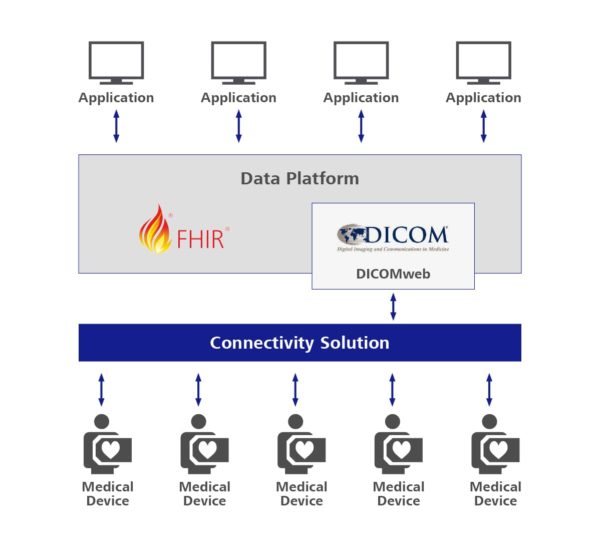
The DICOM service within Azure Health Data Services is used here as the central interface for device connection. As DICOM is an open standard for storing and exchanging information in medical image data management, the majority of medical devices that generate image data communicate using the DICOM protocol. Through an extensible connectivity solution based on Azure IoT Edge, these devices can connect directly to the data platform in Azure using the DICOM standard. This allows a wide range of devices that have been in use with customers for years to be integrated into the ecosystem. This increases acceptance and ensures that more data can flow into the cloud and be further processed to enable clinical use cases and develop new procedures.

Azure API for FHIR® serves as the central data hub of the platform. All data of the ecosystem are stored there in a structured way and linked with each other in order to make them centrally findable and available to the applications. HL7® FHIR® (Fast Healthcare Interoperability Resources) offers a standardised and comprehensive data model for healthcare data. Not only can it be used to implement simple and robust interfaces to one’s own applications, but it also ensures interoperability with third-party systems such as EMR systems (Electronic Medical Record), hospital information systems or the electronic patient record. The data from the medical devices, historical measurement data from local PACS solutions and information from other clinical systems are automatically processed, structured and aggregated centrally in Azure API for FHIR® after upload. This is a key factor in collecting more valuable data for clinical use cases and providing customers with a seamlessly integrated ecosystem.

Schematic representation of building a medical data platform with Azure Healthcare APIs
Figure 2: Building a medical data platform with Azure Health Data Services

Successful collaboration between ZEISS Digital Innovation and Microsoft

As early adopters of Azure Health Data Services, our development teams at ZEISS Digital Innovation work closely with the Azure Health Data Services product group at Microsoft headquarters in Redmond, USA, helping to shape the services for the benefit of our customers. In regular co-creation sessions between the ZEISS Digital Innovation and Microsoft teams, the solution design for currently implemented features of the Azure Health Data Services is discussed. In this way, we can ensure that even the most complex use cases currently known are taken into account.

We are working very closely with ZEISS Digital Innovation to shape Azure’s next generation health services alongside their customer needs. Their strong background in the development of digital medical products for their customers is a core asset in our collaboration and enables the development of innovative solutions for the healthcare sector.

Steven Borg (Director, Medical Imaging at Microsoft)

You too can benefit from our know-how and contact us. Together, we will develop the vision for your innovative solution and support you during implementation.

This post was written by:

Elisa Kunze

Elisa Kunze has been working at ZEISS Digital Innovation since 2013. During her various sales and marketing activities she supported lots of different projects, teams and companies in various sectors. Today she supports her clients in the health sector as a key account manager and supports them in implementing their project vision.

See author’s posts