South Africa is often celebrated as the rainbow nation for its cultures, languages, and history. But our national identity is also deeply intertwined with our natural heritage. As one of the most biodiverse countries on Earth, South Africa is home to 870 bird species, of which only 18 are found nowhere else in the world. Among these is the elusive Botha’s Lark (Spizocorys fringillaris), known as Vaalrivierlewerik in Afrikaans and Unontilontaka in isiZulu.
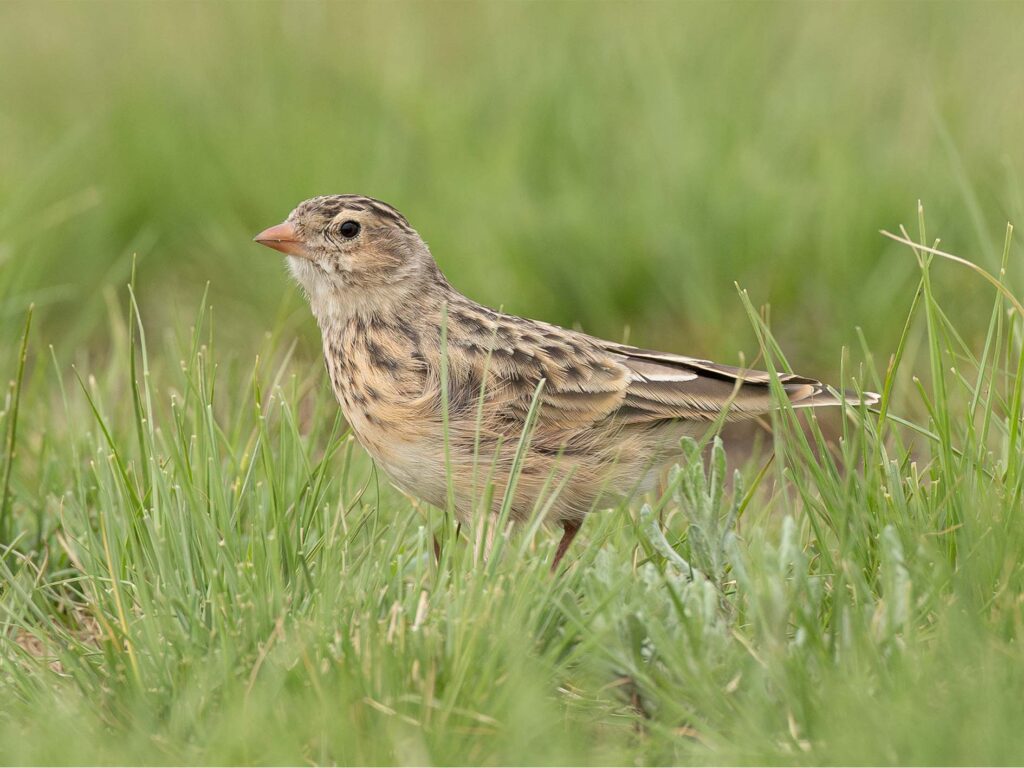
Endemic to the high-altitude grasslands of southern Mpumalanga and the eastern Free State, Botha’s Lark was once more widespread. Today, with fewer than 340 mature individuals remaining, its survival hangs by a thread. The species was recently uplisted to Critically Endangered in the Regional Red Data Book of Birds of South Africa, Lesotho and Eswatini, making it the only endemic bird species in South Africa to carry the highest threat of extinction.
After 18 months without confirmed sightings, hope has returned. Intensive surveys led by BirdLife South Africa, supported by Birding Ecotours and local landowners, have rediscovered multiple individuals – and, crucially, 22 active nests. Even more encouraging, chicks have successfully fledged, offering a rare glimpse into the species’ breeding ecology and renewed hope for its survival.
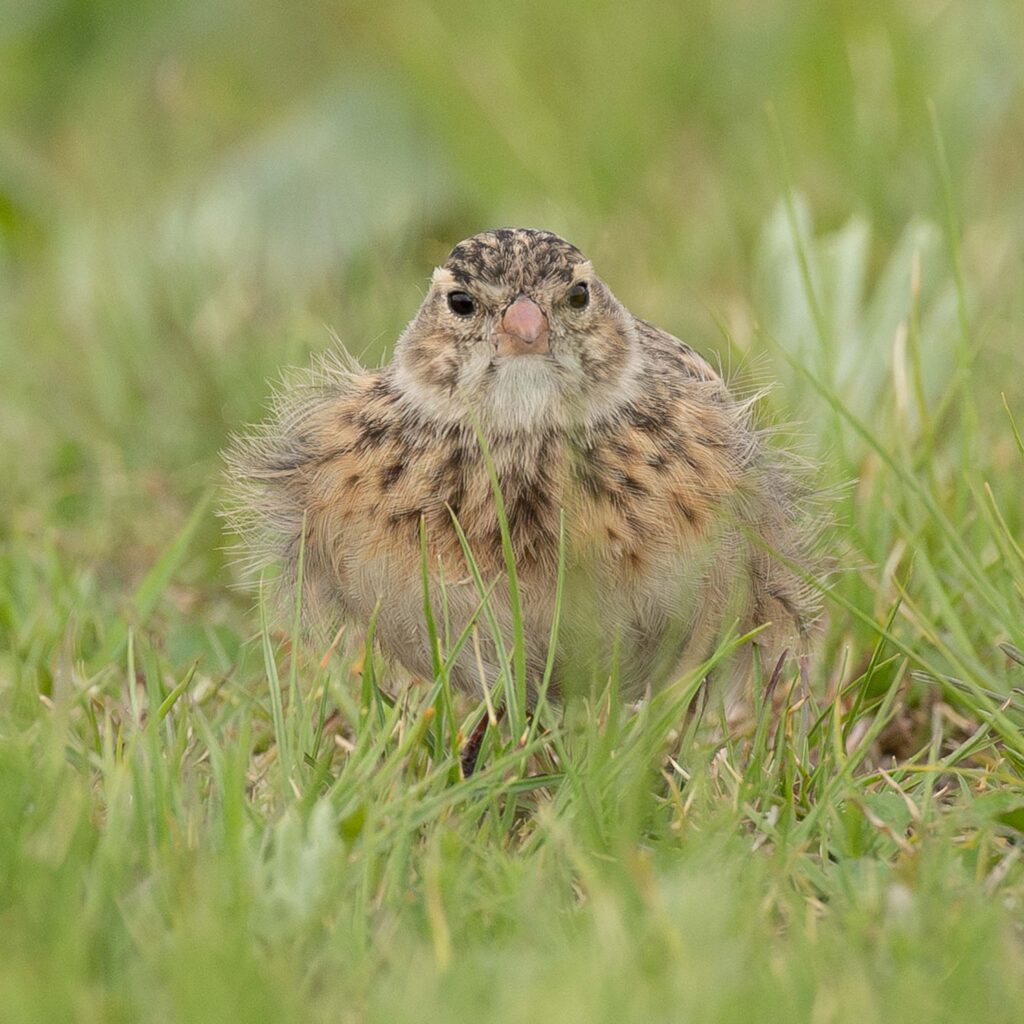
The challenges for Botha’s Lark, however, remain significant. Many nests represent repeated renesting attempts, and fewer than 21% of eggs survived to fledging. Predation by mongooses and domestic dogs is thought to be a major factor, but the species is also highly vulnerable to habitat loss and change, including agricultural expansion, altered grazing regimes, poorly timed burns, and development such as renewable energy infrastructure.
The plight of Botha’s Lark reflects a broader crisis in South Africa’s grasslands, one of the country’s most threatened and least protected ecosystems. These grasslands provide critical ecosystem services, including water provision, carbon storage, and support for livestock farming. Conserving Botha’s Lark is therefore not just about a single species; it is about protecting the landscapes and communities that depend on them. This bird is the proverbial canary in the coal mine.
This year, BirdLife South Africa hosted the inaugural Botha’s Lark Atlas Bash, covering sites from Amersfoort to Harrismith. The event was a tremendous success, engaging over 40 participants and resulting in 5,644 records across 227 species observed, including 31 species of conservation concern. The highlight of the event was the discovery of a new population of Botha’s Lark, demonstrating the importance of citizen science and coordinated field efforts.
It’s a time to share the story, engage communities, and rally support for this Critically Endangered bird. This is our bird. This is our heritage. Together, we can save Botha’s Lark.
Getting to know Matthew Orolowitz
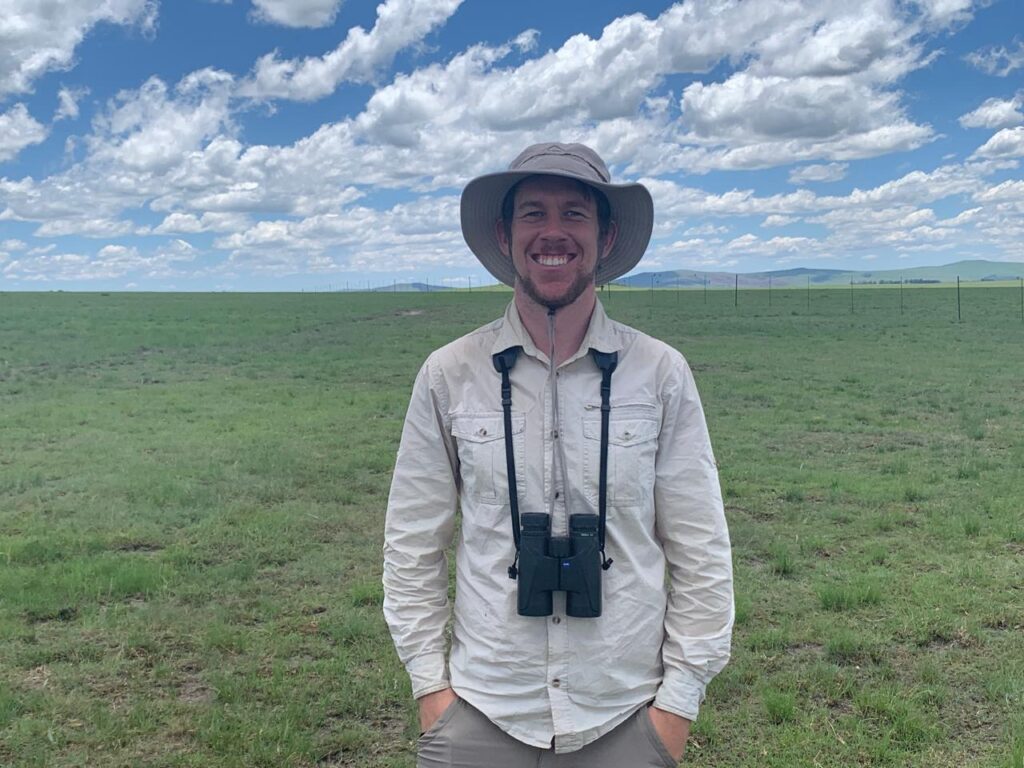
As the Birding Ecotours Fellow for Grasslands Conservation with BirdLife South Africa, I have spent the past year dedicated to understanding and protecting one of South Africa’s most elusive and endangered species: the Botha’s Lark (Spizocorys fringillaris). My role centres on research and monitoring, conducting intensive surveys to locate individuals and nests, and developing a Species Action Plan that acts as a blueprint to safeguard the future of this Critically Endangered bird. Beyond fieldwork, I also focus on raising awareness of the species and engaging with landowners, local communities, and citizen scientists to ensure conservation efforts have lasting impact.
My connection to Botha’s Lark began in 2023, when I first visited Wakkerstroom on holiday. Like many birders, I was captivated by the challenge of finding this rare grassland specialist — only to discover it had gone unseen for several months. That experience sparked a deep desire to contribute to the survival of a species teetering on the edge. There is something profoundly motivating about working to protect biodiversity that we are fortunate enough to share this planet with, and for me, few species embody that responsibility more than Botha’s Lark.
The past year has been full of both challenges and triumph. After 18 months without confirmed sightings, our intensive surveys not only rediscovered the species but also observed active breeding, marking a major milestone in its conservation. These moments, especially the first time I finally saw a Botha’s Lark in the wild, remain unforgettable – my hands were shaking, and it stands as one of the most remarkable experiences of my life.
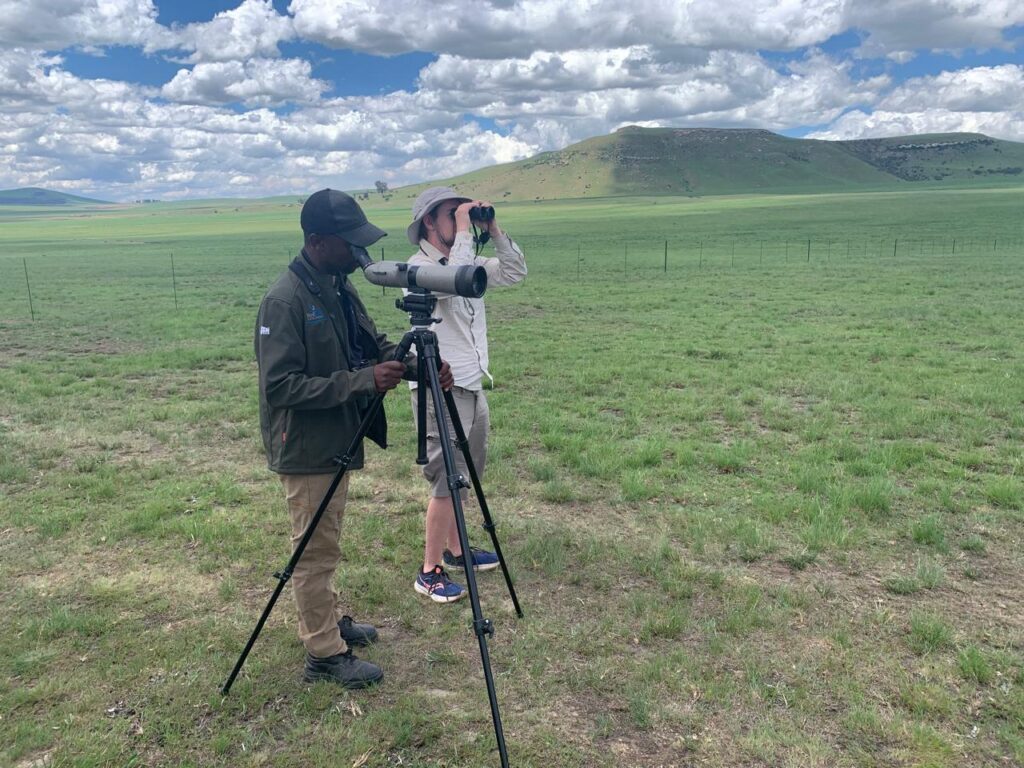
At the Grasslands Conservation Centre in Wakkerstroom, we work as a dedicated team of three: Roy Robertson, who leads our biodiversity stewardship and protected area expansion initiatives, and Zoleka Mkhize, who oversees community engagement and school outreach and myself. We collaborate closely with farmers to gain access to private lands, work alongside citizen scientists, NGOs, and government conservation agencies, and rely on the dedication of everyone who understands the urgency of protecting South Africa’s grasslands. Together, we aim not only to stabilise Botha’s Lark populations but also to ensure the long-term protection of the fragile ecosystems they call home.
Looking ahead, our goal is clear: to save Botha’s Lark from this precarious position and give it a secure future. Every survey, every nest monitored, and every new record contributes to this mission. Being part of such focused and collaborative conservation work is a privilege, and I am committed to doing everything possible to ensure that future generations can witness this truly South African bird.
About Post Author